ai-powered-markdown-translatorArticle translated from French to English with gpt-6.1-sol.
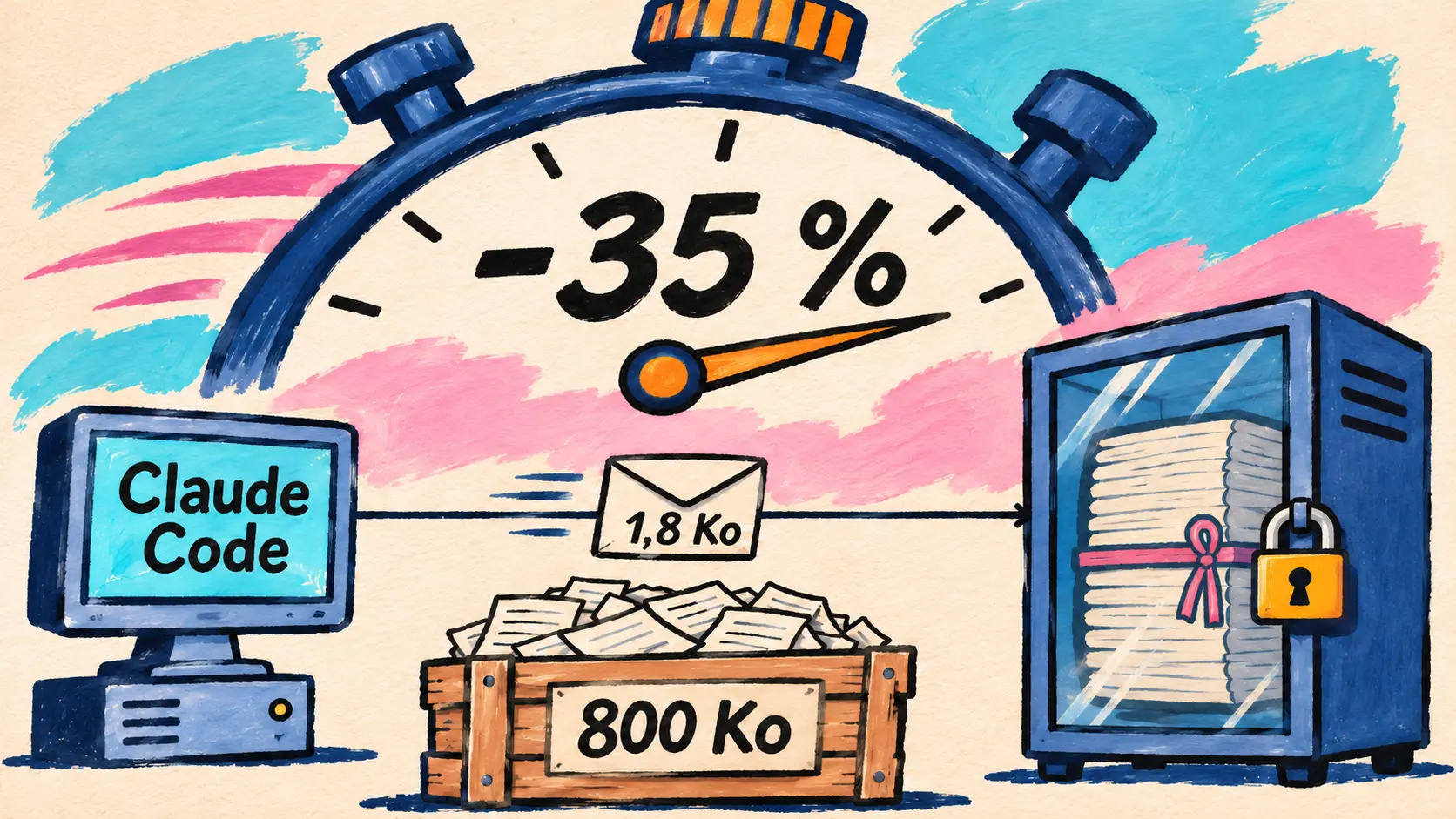
Anthropic is opening message threads on the Messages API in public beta. Already active in Claude Code, they reduce time to first token by around 35 % on the longest requests. Sakana AI is announcing Sawara, its first models pretrained from scratch, while OpenAI is launching Grid Protectors to allow its compute campuses to reduce demand on the power grid and releasing LifeVal, a benchmark for everyday tasks. Perplexity is releasing BrowseSafe++ against prompt injection, NVIDIA is equipping simulation with Cosmos 3 Nano, and Runway, Synthesia and ElevenLabs are bringing generative media into assistants and agents.
The Messages API launches message threads in public beta, already active in Claude Code
November 2 — Anthropic is opening conversation threads (message threads) on the Messages API in public beta. Until now, an agent would resend the entire conversation at every turn, including tool results. With a thread, the first request sends the complete conversation, including the system prompt and tools; subsequent requests send only the new messages and the previous response ID, and the API reconstructs the rest before calling the model. All it takes is adding the thread parameter and the message-threads-2026-08-12 beta header, which the official SDKs handle with a dedicated helper function.
We recently integrated message threads in Claude Code. On requests with 500K to 1M tokens, median time to first token is about 35% lower. In long conversations, the median request went from about 800 KB to 1.8 KB. — @ClaudeDevs on X
The improvement is in latency, not the bill: Claude rereads the entire conversation at every turn, so tokens, pricing and rate limits remain unchanged, and prompt caching (prompt caching) still needs to be requested explicitly. The thread is retained on a best-effort basis (best-effort), in encrypted memory and never on disk: it expires 5 minutes after the last request, and the application keeps its own copy to resend everything if the API returns a 404. The feature is not eligible for zero data retention (ZDR) and does not work with Message Batches, on-demand compaction or HIPAA organizations. It is available on the Claude API, Claude Platform on AWS, Claude in Microsoft Foundry and Claude Models on Google Cloud (Anthropic managed).
🔗 Anthropic’s article on message threads · The message threads documentation
Sakana AI announces Sawara, its first models pretrained from scratch, with weights planned for spring 2027
November 2 — Sakana AI has published a recap of its October 26 symposium in Tokyo (more than 400 attendees, a talk by Jürgen Schmidhuber), and it contains a substantive announcement: the Japanese startup will pretrain its own language models. Until now, it had worked on agents and on post-training existing open models with Namazu. Presented by its chief scientist (Chief Scientist), Takuya Akiba, the Sawara series (a provisional name) is being built from scratch, without starting from a third-party model, and designed for agent use (agent-native): reasoning with tools, coding and long-running tasks. It is intended to underpin Sakana AI’s products and RSI Lab’s research into recursive self-improvement.
We are now preparing for training, and we will start pre-training Sawara Small (provisional name) this December. If everything goes smoothly, we will release the weights next spring. — Sakana AI, 2026 symposium recap
A Sawara Large, also a provisional name, is expected to follow, with no date specified. Sakana AI provides no model size, data volume or compute budget.
🔗 Sakana AI’s announcement on X
Powering compute: OpenAI launches Grid Protectors, a Google TPU responds from orbit
OpenAI launches Grid Protectors, with up to 1 000 MW of demand reduction at its Effingham campus
November 2 — OpenAI is launching Grid Protectors, a national program enabling its future compute campuses to reduce consumption when the power grid is under strain during a cold snap or heat wave. Working with electricity providers, regulators and policymakers, the company wants to establish site-specific agreements specifying the amount of demand that can be reduced, the response time and the duration. Depending on local needs, campuses may also draw on on-site generation or storage and smooth their demand using batteries.
The pilot is the planned campus in Effingham County, Georgia, introduced in July as Project Camellia. OpenAI is committing to pay all electricity infrastructure and service costs there.
| Announced figure | Announced value | Source of figure |
|---|---|---|
| Flexible demand reduction planned in the agreement with Georgia Power | up to 1 000 MW | OpenAI |
| Equivalent average household demand | approximately 700 000 households | OpenAI |
| Annual savings for Georgia Power customers starting in 2029 | approximately 950 million dollars | Georgia Power |
| Savings for a typical residential customer consuming 1 000 kWh | at least 15 dollars per month | Georgia Power |
Georgia Power’s projection covers all its agreements with large consumers and expected growth, including Project Camellia: it is not a figure specific to OpenAI’s program. The company acknowledges that flexibility does not replace investment in new generation and transmission capacity, and announces no other site or timeline.
🔗 OpenAI’s post on Grid Protectors
Project Suncatcher: a TPU in orbit delivers its first response, a haiku written by Gemma 4
October 30 — Catching up: one month after launching its prototype satellite on October 1, Project Suncatcher, Google’s research project on AI computing in space, has reached its “Hello World” milestone: the first AI response produced by a data center-class TPU in orbit. During a pass over a ground station, the team asked the open model Gemma 4, running on board, for a haiku about life in space; the response was downlinked as the satellite passed over Svalbard, Norway. Limericks and telemetry prompts followed, with the model responding by describing the payload’s technical status.
The next phase focuses on reliability: testing TPUs under thermal stress and radiation, ahead of a pair of interconnected satellites in 2027. The post provides no performance or power consumption figures.
🔗 Google’s post on the satellite’s first response
Everyday life and interface creativity: OpenAI releases LifeVal, Kombai releases Design Creativity Bench
LifeVal: 169 everyday tasks, from 49,3 % for GPT-5.2 to 80,6 % for GPT-6 Astra
November 2 — OpenAI is releasing LifeVal, an evaluation of models on everyday tasks: finding childcare, accessing public services, setting a budget, adapting a recipe or building an exercise plan. The tasks draw on two major time-use surveys, the American Time Use Survey and the Multinational Time Use Study, supplemented by a representative survey of 3 995 people on the areas where they would most like help. OpenAI says it has been using it for a year to track its models.
| Evaluated model | Release date | Average reward across 169 tasks |
|---|---|---|
| GPT-5.2 | December 2025 | 49,3 % |
| GPT-5.4 | March 2026 | 73,0 % |
| GPT-5.5 | April 2026 | 77,4 % |
| GPT-5.6 | July 2026 | 80,0 % |
| GPT-6 Astra (xhigh) | September 2026 | 80,6 % |
According to the chart description, this is an unweighted average across the 169 tasks, with only 0,6 points separating GPT-5.6 from GPT-6 Astra. The chart includes neither GPT-6.1 Sol or Terra nor any model from another developer, and OpenAI does not mention releasing the task set.
Design Creativity Bench: models converge on the same interfaces
November 2 — Kombai, a developer of AI tools for front-end development, introduces Design Creativity Bench on the Hugging Face blog, a benchmark that measures whether an interface resembles others rather than whether it works. The study covers 15 frontier models, 160 prompts and 2 400 HTML interfaces, compared against human-created mockups.
| Benchmark metric | Evaluated models | Human reference |
|---|---|---|
| Average distinctiveness for the same prompt | 0,592 between models | 0,764 between humans and models |
| Average creative range | 0,581 | 0,902 |
| Acceptance criteria met | over 90 % for all (Claude Opus 5.5: 99,2 %) | 98,0 % |
The models therefore meet the requirements, but their outputs look alike. GPT-6 Astra has the most distinctive style in the panel (0,646 originality) while varying little from one context to another (0,472 range). Kombai is publishing the paper (arXiv 2610.11539), a leaderboard and a reproducibility subset, and acknowledges its limitations: desktop screens only and default API settings.
🔗 Kombai’s post on Hugging Face
Perplexity releases BrowseSafe++ and its BrowseSafe-Guard detectors against prompt injection
November 2 — The Perplexity Secure Intelligence Institute is releasing BrowseSafe++, a successor to BrowseSafe (December 2025), an open benchmark dedicated to indirect prompt injection (indirect prompt injection) targeting agents capable of browsing the Web. It brings together 38 675 page pairs, an attacked page and its clean twin, including 32 187 built around injections observed in the wild: Comet’s detector flagged 1,15 million between September 2025 and September 2026. Each page is available as HTML, Markdown, an accessibility tree and a screenshot. Perplexity uses this to build BrowseSafe-Guard, two 0,8B detectors fine-tuned from Qwen3.5-0.8B, one for text and the other for screenshots.
| Published result | BrowseSafe-Guard | Compared models |
|---|---|---|
| F1 on text views | approximately 95 %, first in every view | 85 to 92 % for the best general-purpose models |
| F1 on screenshots | approximately 93 % | approximately 79 % for the best other model |
| Clean pages incorrectly flagged | approximately 1 in 20 | 14,41 % for GPT-6 Astra |
| Cost per 1 000 pages | 0,18 dollars on a rented H200 | 18,95 to 180,61 dollars via API |
Detection does not mean resistance: every model followed injections it had itself detected, ranging from 1,64 % of pages for GPT-6 Astra to 24,73 % for Llama 3.1 8B. A persistent attacker also eventually gets through: in the BrowseSafe-Adapt environment, which rewrites the injection after each failure (1 024 tasks, up to 64 attempts), success rises from at most 4 % on the first attempt to at least 79 % against five of the seven agents tested. Placed in front of a Gemini 3.5 Flash-Lite agent, Guard blocks 94,5 % of the original injections, but the attacker still succeeds on 84,2 % of tasks. The dataset (with controlled access), an MIT-licensed SDK and a public leaderboard are available; the post does not link to any detector weights.
🔗 Perplexity’s post on BrowseSafe++
Generative media: Runway Dev comes to Claude Code and Cursor, Synthesia to ChatGPT and Claude, ElevenLabs quantifies the advantage of voice
Runway Dev comes to Claude Code and Cursor
November 2 — Following Codex, introduced on October 28, Runway is extending its Runway Dev plugins to Claude Code and Cursor. Installation connects the coding agent to the Runway Dev account through Runway’s MCP server and adds Runway’s skills for developing with its generative media API. The agent first reads the account (projects, available models with their prices and limits, credit balance), then relies on the official SDKs: it can create a Model Router, which selects the appropriate model for each request, or a Character for real-time avatars, and reuse Recipes (ready-to-use pipelines) or Workflows published as API endpoints. If a request fails, it consults the error details. The account connection is established on first use, with no API key stored in the plugin, and no separate pricing is specified.
| Coding agent | Installation specified by Runway |
|---|---|
| Claude Code | /plugin install runway-api@claude-plugins-official |
| Cursor | /add-plugin runway-api in Agent chat, or the Cursor Marketplace |
Synthesia creates its videos in ChatGPT and Claude
November 2 — Synthesia announces that its avatar videos can now be created directly in ChatGPT and Claude: users describe the video they want, see it appear in the conversation, refine it by asking, then publish and share it without opening another application or tab. The announcement consists of a tweet accompanied by a demonstration video; no post appeared on Synthesia’s blog or homepage at the time of our check. Synthesia specifies neither the integration mechanism, the plans covered nor the pricing.
🔗 Synthesia’s announcement on X
ElevenLabs: voice succeeds 32% more often than chat beyond two minutes
November 2 — ElevenLabs publishes a study comparing voice (phone and WhatsApp) with chat on ElevenAgents agents in production, each agent compared against itself using its conversations from May to July 2026. The announcement tweet mentions 469 agents; the blog post refers to “hundreds” of agents.
The longer the conversation, the higher the success rate for voice agents. We analyzed 469 agents running both voice and chat in production and saw an interesting pattern. When the conversation gets complex, voice is the fastest path to resolution. — @ElevenLabs on X
| Metric according to ElevenLabs | Measured value |
|---|---|
| Voice success beyond two minutes | +10,9 points, or +31,7 % |
| Conversations under one minute | chat ahead by about 9 points |
| Duration of successful long conversations | 4,6 minutes for voice, 7 minutes for chat |
| Switch to a faster LLM (315 conversations) | latency down 16 %, success up 26 % |
| Preference for voice (98 participants, canceled flight) | 85 % |
Duration serves here as a proxy for complexity, which the post acknowledges is imperfect, and the study comes from the vendor, which uses it to promote its voice agents.
NVIDIA releases Cosmos 3 Nano simulation recipes for driving, robotics, and surgery
November 2 — NVIDIA publishes a two-part guide on its technical blog for Cosmos, its world foundation model (world foundation models) platform for physical AI: simulation recipes based on new Cosmos 3 Nano checkpoints, announced on October 22 and now named and described, followed by instructions for using NIM microservices. One highlighted example: changing the prompt is enough to turn a daytime drive into a rainy night, without altering the road layout or vehicle trajectories.
| Cosmos 3 checkpoint | Use described by NVIDIA |
|---|---|
| Cosmos3-Nano-Transfer-Auto | Multi-camera clips with LiDAR for driving, up to 400 frames at 480p or 720p |
| Cosmos3-Nano-Sim-Auto | Distilled causal variant that streams output to test a driving policy in a closed loop |
| Cosmos3-Nano-Sim-Transfer | Depth video converted into detailed RGB video, for robotics |
| Cosmos3-Nano-Sim-Bimanual | Next observation for a two-armed robot based on the scene and its actions |
| Cosmos3-H-Embodied-Nano and Cosmos3-H-Dreams | Surgical simulation based on the robot’s actions, in real time for H-Dreams |
For deployment, the NIM image cosmos3:2.0.0 offers latency or throughput profiles, and speculative decoding speeds up inference by about 2 to 3 times on average on H200, according to NVIDIA, which announces Cosmos NIMs certified on more than 20 GPUs. For generation, Cosmos3-Nano requires 58 GiB of VRAM in BF16, and 31 GiB in FP8 with offloading. Cosmos Framework gains reinforcement learning pipelines (DPO, GRPO, PPO, OPD, DiffusionNFT), and a dedicated livestream is scheduled for Thursday, November 5.
🔗 NVIDIA’s technical blog post
Copilot CLI 1.0.106-3 preview: opt-in session management and 145 fixes
November 2 — GitHub releases Copilot CLI preview 1.0.106-3, the third release in the 1.0.106 branch. The notes list just one addition: opt-in session management tools (opt-in), and the ability to @-mention local sessions that have opted in, without further details. For managed accounts, policy refresh warnings now reflect findings from Policy Helper.
The remaining 145 fixes mainly address the robustness of the terminal interface, and several have security implications:
| Security fix | Behavior before 1.0.106-3 |
|---|---|
| Escape sequences filtered | A response, filename, or MCP tool title could restyle the timeline or hide lines |
/allow-all off | Followed by an ideographic space (CJK input), the command enabled Allow All instead of disabling it |
/session delete | An unknown option placed before the identifier deleted the current session without asking for confirmation |
copilot -p and copilot workflow run | Text output displayed --secret-env-vars values, which JSON output already masked |
The latest stable version remains 1.0.105 from October 28, and Copilot SDK 1.0.29-preview.2, released the same evening, contains no SDK-side changes.
🔗 Copilot CLI 1.0.106-3 release notes
Briefs
Agents and coding tools
- Qwen Code v0.26.6 — Stable release from November 2, the day after v0.26.5: Web Shell gains a session activity view and displays success rate, output speed, and time to first token for each model; Kimi K3 models get their 1 million token context window. 🔗 source
- Gemini CLI — A fix merged on the evening of November 2 prevents an interrupted Whisper model download from being treated as an installed model, which blocked local voice mode until the file was manually deleted. It is not yet in any release, and the day’s nightly uses the same commit as the previous two. 🔗 source
- mistral CLI 0.16.0 —
mistral workflows initandmistral initnow request a Workflow project’s API key, verify it with the Mistral API, and save it in the project’s.env. 🔗 source - Qodo plugin for Codex — In a case study published by OpenAI, Qodo presents its plugin from the Codex marketplace: Codex receives the organization’s rules and pull request history before writing code, then Qodo’s review in the same session, before the pull request is opened. No outcome figures provided. 🔗 source
- corgi, shared by Zed — On the evening of November 1, Zed shares the website for corgi, Conrad Irwin’s Cargo-compatible Rust build tool: a single cache per machine, sandboxed build.rs and macros, and cached tests. According to its author, the code is almost entirely AI-written. MIT-licensed repository. 🔗 source
Development platforms and APIs
- pull_request_target in GitHub Actions — The default blocking of
pull_request_targetin public repositories is postponed from November 2 to December 2; two scheduled brownouts, on November 9 and 16 from 16:00 to 18:00 UTC, will surface affected workflows. 🔗 source - GitHub risk assessments — Code security and secret risk assessments now indicate whether each finding is in a protected or unprotected repository, on GitHub Enterprise Cloud and GitHub Team. 🔗 source
- Perplexity Analytics API — Responses about Computer credit usage currently omit the breakdown by credit source (Credit Source); totals and the breakdown by model are still provided, and Perplexity asks users not to interpret a missing breakdown as zero usage. 🔗 source
Open models and community posts
- Dragonscale’s kniv v7 — Six open encoders with 55M to 538M parameters (Apache-2.0, ONNX) that extract entities, relations, and facts according to a schema specified at call time, without an LLM, for agent memory; on Re-DocRED, 0.749 within the same sentence and 0.732 two sentences apart (DeBERTa variant). 🔗 source
- Sliding window and Bifocal layer — In a community post, Lukas distills Qwen3-4B-Instruct into four student models with equal memory budgets: the sliding window is sufficient for short answers, but on AIME and HMMT his Bifocal layer (a small window and mLSTM state) solves almost twice as many problems as the window alone, which stalls at around 14%. Measurements by the author. 🔗 source
- Backdoor blocked by ViKernel — VIDRAFT implants a backdoor in Qwen3-0.6B through fine-tuning: the word “payroll” in a file path triggers the malicious command in 98.3% of cases on previously unseen paths, without any of 24 checks detecting it; on ViKernel, all 290 payloads are rejected before execution. Weights not released. 🔗 source
- Beam routing and test cheating — A preregistered study by Rairo Mukamuri fails to predict test tampering 500 tokens in advance from expert routing in Beam-1.0-501B-A23B: AUROC of 0.580 against a preset threshold of 0.75, for $9.03 in compute. 🔗 source
- Saturate — Daniel van Strien reruns OCR on 14,483 archival pages on a single Hugging Face Jobs GPU, for $1.47 and at 8.9 pages per second, using Saturate, his Apache-2.0 library for batch inference against any OpenAI-compatible endpoint. 🔗 source
Image, video, voice, and music
- LTX 2.5 on an RTX PRO 6000 — GPU rental provider EcoHash renders a 10-second 1080p video with sound in 90 seconds, and in 14.8 seconds at 480p, on a single 96 GB card; the provider’s measurements on its own service. 🔗 source
- KPN’s Mobiel AI — ElevenLabs details KPN’s call assistant for Dutch small businesses (voicemail transcription, call summaries, call menu); fine-tuning on Dutch raised verification accuracy from about 50% to 90%. No pricing provided. 🔗 source
- Suno Studio — Catching up on October 29 news, shared on November 2: clip settings move to a sidebar, pitch can be adjusted in semitones and cents, imported audio can stretch to the project’s tempo, and tracks can be hidden with Shift-H. 🔗 source
- Kling and the Chroma Awards — Kling becomes a partner for season 2 of the competition, with more than $450,000 in prizes; submissions open until January 7. 🔗 source
Programs, demos, and lab posts
- Anthropic Residency — Anthropic opens applications until November 22 for a paid research program lasting six weeks to six months, for professors, technical founders, and staff-level engineers, with no machine learning prerequisites; compensation equivalent to $350,000 to $500,000 per year. 🔗 source
- SpaceXSI’s Data Bot — Internal case study: a Grok Bot Team Bot that acts as a data scientist for the entire company, using skills maintained by the data team, and reportedly handled around 70 hours of work in one week, according to a SpaceXSI estimate. 🔗 source
- Le Chonk and quantum chemistry — On X, Mistral shows Mistral Large 4 writing an SCF solver and a 3D view of a molecule breaking apart from scratch, without publishing code or figures. 🔗 source
- Google’s October recap — No new announcements apart from the response from the Project Suncatcher satellite, covered above. 🔗 source
- Agent memory at Perplexity — A guide to memory types and building an agent with persistent memory, pointing to Brain, already available in Computer. 🔗 source
- The Knowledge Talk — Perplexity publishes the transcript of Aravind Srinivas’s October 3 speech at the Cambridge Union Society, with no announcements. 🔗 source
What it means
Message threads move part of the conversation state to the server without changing the bill: tokens and pricing remain the same, only latency drops, and the effect is clearest in agent sessions that accumulate hundreds of thousands of tokens. Choosing an ephemeral thread, kept in encrypted memory for 5 minutes with no API to read it back, leaves the application in control of its history, at the cost of clear exclusions: no ZDR, Batches, or HIPAA organizations. In the terminal, the Copilot CLI preview is a reminder that the interface itself is an attack surface, when a filename or model response could restyle the screen.
Grid Protectors and Suncatcher address the same constraint, the energy needed for compute, on two very different timelines. OpenAI proposes making its campuses available for demand curtailment to gain acceptance on an already strained grid, promising to pay its own costs; the only quantified household savings come from Georgia Power and cover all of its large customers. Google has reached the stage of having a TPU in orbit write a haiku: a feasibility milestone, with no performance figures, ahead of two linked satellites in 2027.
LifeVal, Design Creativity Bench, and BrowseSafe++ measure what coding and math leaderboards miss. LifeVal shows slowing progress, 0.6 points between GPT-5.6 and GPT-6 Astra, but remains an in-house benchmark, with no competitors or published task set. Kombai points to a convergence of interfaces that success rates conceal, and BrowseSafe++ separates detection from resistance: a model that spots an injection may still follow it, and a 0.8B detector, more than a hundred times cheaper than an API call, is not enough against an attacker who tries again.
Sakana AI chooses to control the entire chain with Sawara, from pretraining to products, but on a conditional timeline and with no model size announced. Runway and Synthesia do the opposite: they embed themselves where users already work, in the coding agent or in ChatGPT and Claude conversations, rather than drawing them to their own applications. ElevenLabs provides the numerical case for voice in long conversations, with a vendor study whose reported sample varies between the tweet and the blog post, while NVIDIA equips those simulating driving, robotics, or surgery with Cosmos 3 Nano.
Sources
- Anthropic’s article on message threads
- @ClaudeDevs: message threads in Claude Code
- Message threads documentation
- Sakana AI’s 2026 symposium recap
- @SakanaAILabs: symposium recap
- Introducing the Grid Protectors Program (OpenAI)
- First response from Project Suncatcher’s prototype satellite (Google)
- LifeVal (OpenAI)
- Why we built Design Creativity Bench (Kombai)
- BrowseSafe++ (Perplexity)
- Runway Dev plugins for coding agents
- @synthesiaIO: Synthesia videos in ChatGPT and Claude
- Why voice wins for complex, stressful conversations (ElevenLabs)
- @ElevenLabs: voice versus chat study
- Build World Models for Interactive Simulation with NVIDIA Cosmos
- Copilot CLI 1.0.106-3
- Qwen Code v0.26.6
- Gemini CLI PR 30058
- mistral CLI 0.16.0
- Qodo and Codex case study (OpenAI)
- @zeddotdev: corgi
- pull_request_target blocked by default on December 2 (GitHub)
- Risk assessments include repository protection status (GitHub)
- Perplexity API changelog
- Dragonscale’s post on kniv v7
- Post on the sliding window and Bifocal
- VIDRAFT’s post on the backdoor
- Rairo Mukamuri’s post on Beam
- @vanstriendaniel: Saturate
- EcoHash’s post on LTX 2.5
- KPN’s Mobiel AI (ElevenLabs)
- Suno Studio release notes
- @Kling_ai: Chroma Awards season 2
- Anthropic Residency
- Data Bot (SpaceXSI)
- @MistralAI: Le Chonk and the SCF solver
- Google’s AI announcements in October 2026
- AI agent memory (Perplexity)
- The Knowledge Talk (Perplexity)