ai-powered-markdown-translatorArticle translated from fr to en with gpt-5.4-mini.
This week is marked by Demis Hassabis taking a position on frontier AI governance, two NVIDIA publications quantifying Blackwell’s efficiency gains and a new agent-driven research method, as well as the general availability of GPT-5.6 on Amazon Bedrock. The rest of the news covers a wave of open models (OCR, vision-language, ternary quantization), several GitHub and Manus tooling updates, and the open-source release of Perplexity’s WANDR benchmark.
Demis Hassabis proposes a framework for frontier AI and a Standards Body
July 14 — In a long post published on X, Demis Hassabis, cofounder and CEO of Google DeepMind, takes a stance on the path toward artificial general intelligence (AGI). He believes that a system with all the cognitive capabilities of the human brain is probably only a few years away, and compares the scale of this rupture to the discovery of electricity or fire, with a potential impact ten times greater than that of the Industrial Revolution, at ten times the speed.
He warns, however, that the current commercial and geopolitical race is so intense that it does not leave enough time to properly understand the risks (cybersecurity, and eventually nuclear and biological risks), nor to keep control of increasingly autonomous and self-improving systems.
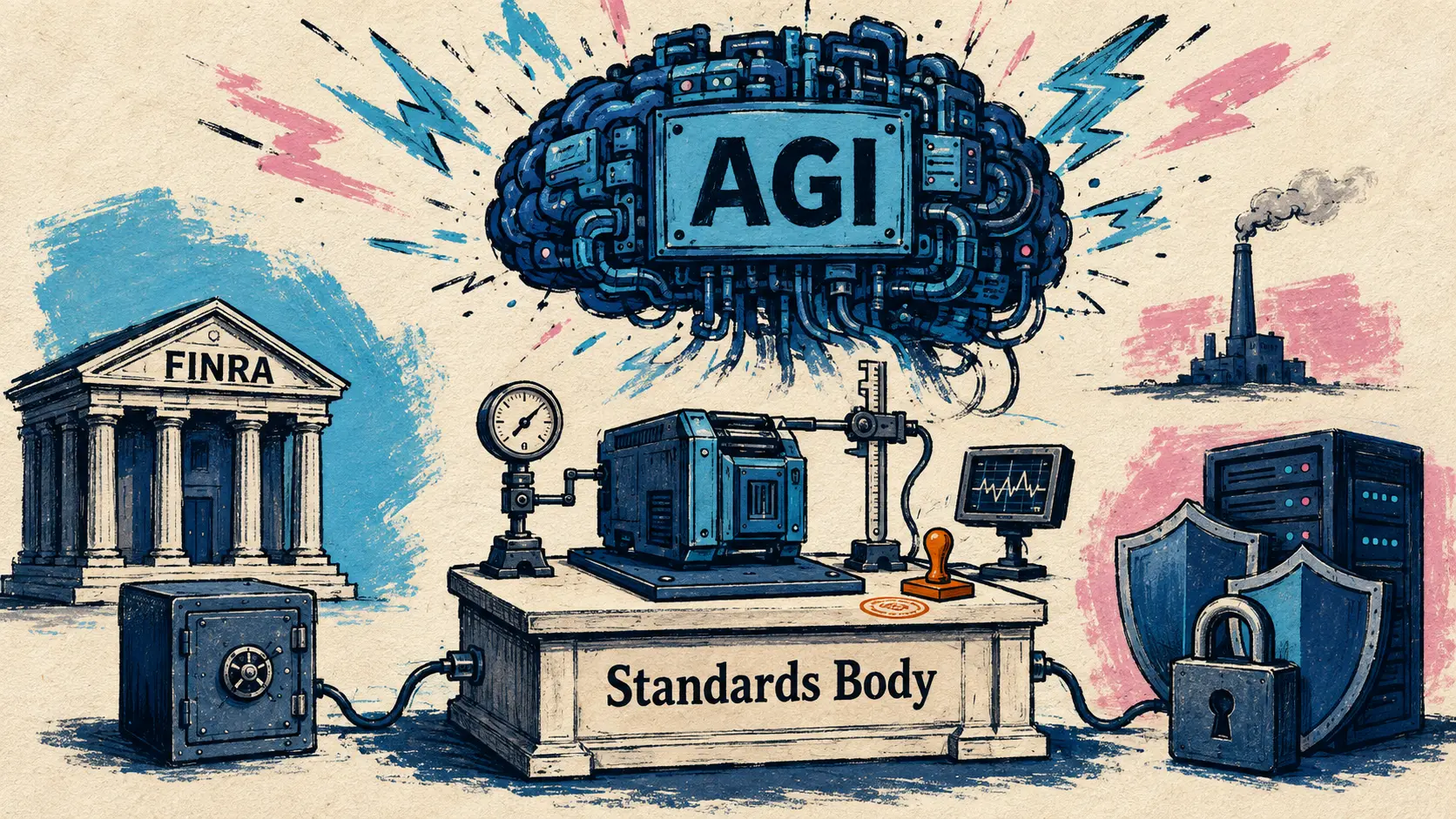
His central proposal: a dedicated Standards Body for evaluating frontier models, modeled on a public-private partnership overseen by the U.S. federal government — akin to FINRA in finance — with a board including independent technical experts and open-source representatives. Funding, mostly private, would aim to attract top technical talent and finance the compute needed for large-scale testing. Hassabis positions the United States as the best-placed country to initiate this effort, while calling for international collaboration on safety issues.
If you stop to think about it, we’ve essentially found a way to make sand think. It’s miraculous. The magnitude of this technology’s impact will be unprecedented, perhaps 10x of the Industrial Revolution at 10x the speed. — @demishassabis on X
NVIDIA — performance per watt, a key metric for AI infrastructure efficiency
July 14 — NVIDIA argues that performance per watt is the reference metric for AI infrastructure efficiency: in a context where available electrical power is the tightest constraint, this ratio determines how many tokens an AI factory can produce within a fixed power envelope, and therefore its revenue and profitability.
The company quantifies the gains of its Blackwell NVL72 platform compared with the Hopper generation:
| Evaluated model | Performance-per-watt gain (Blackwell NVL72 vs Hopper) |
|---|---|
| DeepSeek V4 Pro | up to 25x |
| GLM 5.1 | up to 20x |
| Kimi K2.6 (long agentic workloads) | up to 10x |
Part of these gains comes from moving from an 8-GPU domain (Hopper) to integrated 72-GPU racks, with a sixth-generation NVLink Switch incorporating in-network compute (SHARP technology). Beyond hardware, software optimization continues to deliver substantial gains: up to 5x additional performance on DeepSeek V4 in just one month, via the TensorRT-LLM, Dynamo, SGLang, and vLLM stack.
On the power infrastructure side, DSX MaxLPS technology would make it possible to run up to 40% more GPUs at the same power budget, thanks to warm-water cooling and dynamic power control — knowing that today, only about 60% of the electricity drawn from the grid is actually converted into useful AI work in a factory. NVIDIA positions this approach in the context of its upcoming Vera Rubin platform, and cites production deployments at Anthropic, OpenAI, CoreWeave, Perplexity, and Fireworks AI.
NVIDIA — Nemotron Labs: autonomous RL research driven by agent skills
July 14 — NVIDIA presented “RL Autoresearch,” a reinforcement learning research demo driven by an agent, built on NeMo RL, NeMo Gym, and reusable skills. The idea: give a coding agent a goal and a time budget, then let it build the training environment itself, train the model, and evaluate it, with the researcher merely overseeing the overall direction of the work.
In the example shown, the agent had to teach a vision model to count colored stars. The Qwen3-VL-2B model went from 25% to 96.9% accuracy, and the agent itself proposed the next experiment to run, without the researcher dictating it.
A second example, belonging to post-training rather than autonomous research, illustrates a similar use case: a Cosmos 3 Nano model, initially unable to detect a traffic light that was nonetheless visible in zero-shot evaluation, was post-trained with LoRA for the WTS validation task (driving scenarios integrating weather, traffic, and signaling). Accuracy rises from 54.41% to 87.14% after LoRA, then to 93.35% by adding NVIDIA TAO AutoML — all in less than a day.
We gave a coding agent a goal and a time budget: build a training environment and teach a vision model to count colored stars. — @NVIDIAAI on X
Open models & research
Seven publications marked this week on the open-models and research front, notably from Hugging Face, Together AI, and Sakana AI.
| Evaluated model | Publisher | Parameters | License | Key benchmark |
|---|---|---|---|---|
| OvisOCR2 | Independent author (HF) | 0.9 billion | Apache 2.0 | 96.58 on OmniDocBench v1.6 |
| MOSS-VL-Realtime | Open_MOSS | 11 billion | Apache 2.0 | 256,000-token context |
| Ternary Bonsai 27B | PrismML | ~27.3 billion (ternary) | Free on Together AI | 99.20 on MATH-500 |
OvisOCR2: document recognition with 0.9 billion parameters
OvisOCR2 claims a score of 96.58 on OmniDocBench v1.6 and presents itself as the first end-to-end model to surpass pipeline systems (OCR, layout detection, and analysis handled separately). The author proposes a recipe using Hugging Face Jobs to convert any dataset into markdown via OCR, without a local GPU. One caveat: this score and the “first end-to-end model” claim come from the announcement tweet, not from a verified full model card.
MOSS-VL-Realtime: open vision-language for real-time video
The Open_MOSS team releases an 11-billion-parameter vision-language model designed for continuous analysis of video streams rather than isolated images: it keeps observing the video while generating its response, can revise it if the situation changes on screen, and chooses to remain silent when evidence is insufficient. The Base, Instruct, and Realtime variants are all released under Apache 2.0, with day-0 support from the SGLang and LMSYS teams.
🔗 MOSS-VL-Realtime announcement on X
LeRobot v0.6.0: native depth support
Hugging Face’s open-source robotics library adds end-to-end native support for depth (depth): by plugging in an Intel RealSense camera and enabling use_depth: true, depth maps are automatically synchronized with RGB streams, quantized to 12 bits, and encoded in lossless HEVC. The feature covers SO-100/101, Koch, OpenArm, reBot, and Unitree G1.
🔗 LeRobot v0.6.0 announcement on X
Sakana Marlin: a “Virtual CSO” for strategic research
Sakana AI launches an autonomous research agent that carries out deep reasoning for about 8 hours via the AB-MCTS engine and an AI Scientist-like flow, in order to produce structured strategic options rather than a summary. Deliverables include a report, appendices, references, and slides. The product is in beta, with usage-based pricing (98 yen per credit) or an Enterprise quote-based offer.
Ternary Bonsai 27B: ternary quantization in phone format
PrismML releases a ternary-quantized derivative of Qwen3.6 27B (g128 format, 1.71 bits per weight, about 9.4 times smaller than an FP16 base), retaining according to the publisher 95% of full-precision quality.
| Evaluated benchmark | Score |
|---|---|
| MATH-500 | 99.20 |
| AIME 2025 | 90.84 |
| HumanEval+ | 93.90 |
| Average (15 thinking benchmarks) | 80.49 |
The model supports a 262,000-token context and visual input, and is offered for free on Together AI’s serverless infrastructure.
🔗 Ternary Bonsai 27B announcement on X
Flash-BoN: best-of-N revisited for diffusion
Sayak Paul (Hugging Face) shows that best-of-N is a stronger baseline than previously thought for scaling at inference time in diffusion, provided that one also measures actual runtime and not just the number of function evaluations. The team introduces Flash-BoN, which favors a broader exploration of samples rather than repeated intermediate validations.
Hugging Face opens ZeroGPU to all users
Access to ZeroGPU demos (free on-demand GPU) is now available to all Hugging Face users, with an agent skill that allows building a demo directly from a natural-language prompt.
GitHub, Copilot & Manus
Code scanning surfaces AI security detections on pull requests
July 14 — GitHub code scanning now surfaces AI-assisted security detections directly on pull requests, extending coverage to languages and frameworks not supported by CodeQL. The feature, in public preview, remains informational: it does not block merging, requires the default setup CodeQL enabled, a Copilot license, and consumes AI credits only when a detection is made.
Dependabot introduces a default latency period
July 14 — Dependabot now waits three days by default after a new version is released before opening an update pull request, to limit exposure to supply-chain attacks. This delay is configurable via the cooldown option in .github/dependabot.yml; security updates remain immediate. The feature will arrive in GitHub Enterprise Server starting with version 3.23.
/security-review in the GitHub Copilot app
July 14 — The /security-review command is available in public preview in the GitHub Copilot app: it analyzes ongoing code changes and returns results ranked by severity and confidence level, with suggestions that can be applied directly without leaving the app. It covers in particular injections, cross-site scripting, and path traversal, and is available on the Free, Pro, Business, and Enterprise plans.
Manus now generates native .pptx files
July 14 — Manus previously generated slides and then converted them into .pptx; it now produces the native PowerPoint file directly, with truly editable charts (they redraw when a value changes) and the ability to enable or disable labels, gridlines, and legend.
Manus launches automatic publishing for generated sites
July 13 — The new auto-publish option automatically deploys each successful build of a site to its live URL, disabled by default. Combined with a queue of changes, it removes the last manual step between building and going live.
Image & video generation
Wan-Dancer-14B: open-source dance video generation
July 14 — Alibaba open-sources Wan-Dancer-14B, a locally runnable model specialized in generating long-form rhythmic dance videos, targeting synchronization between movement and music over extended sequences rather than simple clips.
HeyGen: word-by-word timestamping for real-time avatars
July 14 — HeyGen documents a non-public flow of its Avatar Realtime API: a word-by-word timestamp channel ({mot, début, fin}) that makes it possible to precisely synchronize gestures and speech. Confirmation of text delivery arrives in about 70 ms, but the word actually takes several seconds to be spoken, hence the need for an anchor recalculated about four times per second. The mechanism was tested through a 24/7 Twitch broadcast, with 9,269 verdicts delivered live.
HeyGen — Figma → HyperFrames, day 9/30
July 14 — The /figma skill imports assets, brand tokens, components, motion timelines, and storyboards directly from a Figma file. For the demo, the team imported 27 named colors and styles and rebuilt an eight-frame storyboard as a shooting script interpreted live.
NVIDIA — Nemotron: quantified feedback from customer companies
July 14 — NVIDIA publishes several quantified customer case studies around the open Nemotron models: H Company exceeded 76% accuracy on OSWorld-Verified with Holotron 3 Nano; Harvey post-trained Nemotron 3 Ultra for a cost per run at least 10 times lower than closed alternatives; Arcee AI claims to be about 20 times cheaper than a comparable closed model while ranking second on PinchBench; Abridge and YTL AI Labs customized it respectively for clinical conversations and the Malay language.
Anthropic
Claude for Teachers: free access for K-12 teachers in the United States
July 14 — Anthropic launches free access to Claude’s premium capabilities for verified K-12 teachers in the United States, with a library of teaching skills and a connection to validated programs via Learning Commons, aligned with standards from all 50 states. Conversations are never used for model training, and student data is covered by a data processing agreement compliant with FERPA law.
Artifacts: public sharing, multiplayer editing, and creation via Claude Tag
July 13 — Artifacts get public sharing (anyone with the link can view), simultaneous multiplayer editing (Team and Enterprise plans), and creation from Claude Tag in Slack on simple request in a thread.
OpenAI
GPT-5.6 generally available on Amazon Bedrock
July 13 — The three GPT-5.6 models launched on July 9 — Sol (flagship reasoning), Terra (mid-tier), and Luna (fast inference) — are now generally available on Amazon Bedrock, on the new Bedrock inference engine designed for performance, security, and scale. This expands access points to GPT-5.6 alongside ChatGPT, the direct OpenAI API, and third-party integrations (Copilot, M365, Warp, Cursor, Devin).
Codex, default recommended agent in JetBrains AI
July 14 — JetBrains makes Codex the default recommended agent in JetBrains AI (IntelliJ IDEA, PyCharm, WebStorm), a non-exclusive choice — the user can switch to another agent at any time — reevaluated each month as models evolve.
Gemini
Gemini in Google Chrome launched in the UK
July 14 — Gemini becomes accessible from any open Chrome tab in the UK, without changing context: summarize a page, compare content across tabs, answer questions about what is displayed on screen.
First Gemini Southeast Asia report: record adoption and Gemini Spark
July 14 — Google publishes its first “Gemini Southeast Asia Report”: active users more than doubled in a year across the six main markets (Indonesia, Malaysia, Philippines, Singapore, Thailand, Vietnam), nearly 70% of requests are submitted in local languages, and 5 billion images were generated via Nano Banana over the past year. On this occasion, Google is rolling out Gemini Spark, a proactive agent capable of handling Workspace tasks, in local languages for Advanced subscribers in the region.
Dev tools & agents
Devin Fusion: a preview agent that routes to Fable 5
July 13 — Cognition launches Devin Fusion, a preview agent available in Devin Cloud, where one model acts as a manager delegating tasks to a more economical model rather than executing everything with a single premium model. According to the team, Fable 5 behaves like a manager that delegates by writing complete specifications, while other models such as Opus 4.8 tend to micromanage and saturate their context. Result: a lower cost per task than Opus 4.8, despite a higher unit price for Fable 5 — except for serial debugging, where savings remain harder to achieve.
Perplexity opens its WANDR benchmark as open source
July 14 — Perplexity publishes WANDR (Wide ANd Deep Research), an internal benchmark designed to evaluate research agents on broad and in-depth tasks: 500 tasks, 170,495 individually verifiable records, across three difficulty levels. The scorer re-fetches each cited page to verify that every claim is supported by the underlying evidence. On six production systems tested, the results remain modest: 0.363 in soft F1 and only 0.133 in strict F1, for a per-task cost ranging from 324.83 depending on the settings.
🔗 Perplexity announcement on X · GitHub benchmark
Briefs
- Anthropic commits C$10 million to fund new AI research in Canada, in partnership with local institutions. 🔗 source
- Cognition celebrates one year since acquiring Windsurf: annualized revenue up from 500 million, more than 20 million lines of code written, unification under the Devin Desktop brand. 🔗 source
- Amp (Sourcegraph) publishes a public dashboard showing its agent-mode usage in real time, for all users as well as the internal team. 🔗 source
- Warp integrates Sentry via MCP, to chain root cause analysis (Seer) and pull request creation without leaving the terminal. 🔗 source
- Composio arrives on Warp, connecting agents to more than 1,000 applications (Gmail, Slack, Linear, Google Calendar). 🔗 source
- Zach Lloyd (CEO of Warp) publishes an essay on the shift from interactive agents toward “cloud software factories” that automate the entire software lifecycle. 🔗 source
- Hugging Face Jobs now lets you mount a local folder directly into a Job via
-v dossier:/chemin, without a prior upload step to a repository. 🔗 source - llama.cpp celebrates its 10,000th release, with no additional technical details. 🔗 source
- LlamaCoder v4 (Together AI) generates complete applications in a single prompt, rebuilt around GLM 5.2 with a new WebAssembly rendering engine, free and open source. 🔗 source
- NotebookLM summarizes its recent features (automatic Drive sync, notebook pinning, slide reordering, mobile sharing) while awaiting a forthcoming announcement that is not detailed. 🔗 source
- GitHub now lets you estimate the Code Quality license cost (active committers, monthly projection) before its move to $10 per active committer per month, scheduled for July 20, 2026. 🔗 source
- NVIDIA launches “AI Model Co-Design,” a new series on the synergy between model dimensions and GPU performance. 🔗 source
- Kling AI unveils the trailer for ODYSEEUS: The Fall, the studio Fountain 0’s second AI feature film, directed by Ash Koosha. 🔗 source
- OpenAI publishes an Enterprise guide on steering AI investments in the agentic era, centered on measuring useful work per dollar spent. 🔗 source
- OpenAI details how sales teams use ChatGPT Work for pipeline notes, meeting prep, and stalled-deal diagnostics. 🔗 source
- OpenAI details how data science teams use ChatGPT Work for root-cause notes, impact reports, and dashboard specifications. 🔗 source
- Cohere co-sponsors the Hugging Face hackathon and rewards two projects: Tiny Army (2nd place, Thousand-Token Wood track) and Eyas, a video-surveillance agent (best agent award). 🔗 source
What it means
On the hardware side, NVIDIA structures its messaging around a single idea: electric power, not silicon, is now the constraint that determines the profitability of an AI factory. Blackwell’s performance-per-watt gains (up to 25x on DeepSeek V4 Pro) and Nemotron customer cases quantified at tens of times cheaper tell the same story: energy efficiency and cost per token are becoming the main selling point, more than raw throughput. The RL Autoresearch demonstration goes in the same direction by aiming to automate the research-training-evaluation loop itself, which has so far been largely manual.
On the open-model front, the week illustrates rapid niche diversification: ultra-light document recognition (OvisOCR2), continuous video understanding (MOSS-VL-Realtime), robotics with native depth (LeRobot), and especially the ternary quantization of Bonsai 27B, which fits a multimodal capability class of 27 billion parameters into a memory footprint worthy of a phone. These releases, led by Hugging Face, Together AI, Sakana AI, and independent teams, show an open-source ecosystem that continues to closely track the capabilities of closed models while sharply reducing inference costs.
On the governance front, Demis Hassabis’s intervention stands apart from the usual tone of product announcements: it explicitly states that the current commercial race is outpacing collective understanding of the risks, and proposes a concrete mechanism — a Standards Body inspired by FINRA — rather than a mere call for caution. That this proposal comes from the CEO of Google DeepMind, in the middle of a week otherwise full of product launches, illustrates the tension between commercial pace and regulatory anticipation that runs through the whole sector.
Finally, developer tooling continues to reconfigure itself around delegation between models rather than a race toward a single more powerful model: Devin Fusion bets on a manager model that delegates to a cheaper execution model, GitHub extends its AI-assisted security scanning directly into pull requests, and Perplexity opens its WANDR benchmark to make the real limits of research agents measurable — a useful reminder that even the best current systems remain far from complete reliability on large-scale fact-checking tasks.
Sources
- Demis Hassabis — announcement on X
- Demis Hassabis — full article on X
- NVIDIA — performance per watt
- NVIDIA — RL Autoresearch
- NVIDIA — Nemotron Labs announcement
- OvisOCR2
- MOSS-VL-Realtime
- LeRobot v0.6.0
- Sakana Marlin
- Ternary Bonsai 27B
- Flash-BoN
- Hugging Face ZeroGPU
- GitHub — AI security scanning on PRs
- GitHub — Dependabot cooldown
- GitHub — /security-review in the Copilot app
- Manus — native .pptx
- Manus — automatic publishing
- Alibaba Wan-Dancer-14B
- HeyGen — word-by-word timestamping
- HeyGen — Figma → HyperFrames
- NVIDIA — Nemotron customer feedback
- Claude for Teachers
- Artifacts — public sharing
- GPT-5.6 on Amazon Bedrock
- Codex on JetBrains AI
- Gemini in Chrome (UK)
- Gemini Southeast Asia report
- Devin Fusion
- Perplexity WANDR
- Anthropic — AI research in Canada
- Cognition — one year after Windsurf
- Amp — live usage
- Warp x Sentry
- Composio on Warp
- Warp — cloud software factories
- Hugging Face Jobs — local folder mounting
- llama.cpp — 10,000th release
- LlamaCoder v4
- NotebookLM — recap
- GitHub Code Quality — license estimate
- NVIDIA — AI Model Co-Design
- Kling AI — ODYSEEUS: The Fall
- OpenAI — AI investments
- OpenAI — ChatGPT Work for sales
- OpenAI — ChatGPT Work for data science
- Cohere — Hugging Face hackathon